
How to Install Seat Covers can make your car look fresh and protect your seats from wear and stains. Many people think this task is complicated, but with the right steps, you can do it yourself, even if you have never tried before.
This guide will show you how to install seat covers like a pro, avoid common mistakes, and make your ride more comfortable and stylish.
Why Install Seat Covers?
Seat covers are more than just a style choice. They help in several ways:
- Protect original seats from spills, UV rays, and dirt
- Make cleaning easier
- Improve comfort with extra padding
- Boost your car’s resale value by keeping seats in good shape
If you have kids or pets, seat covers are especially useful. They save you money on deep cleaning and repairs.
Types Of Seat Covers
Choosing the right seat cover is the first step. Here’s a quick look at the most common types.
| Type | Material | Best For | Average Price (per set) |
|---|---|---|---|
| Universal Fit | Polyester, Neoprene | Most Cars | $25–$70 |
| Custom Fit | Leather, Fabric | Exact Car Models | $100–$400 |
| Disposable | Plastic | Short-Term Use | $10–$20 |
Universal fit covers are easy to find and less expensive, but they might not fit perfectly. Custom fit covers cost more, but they look better and stay in place. Disposable covers are good for short-term needs, like after a car wash or during repairs.

What You Need Before Starting
Gather these items before installing seat covers:
- Your new seat covers (confirm they match your car’s seat style)
- A flathead screwdriver (for tucking fabric)
- Scissors (if adjustments are needed)
- Cleaning supplies (vacuum, cloth, mild cleaner)
- Zip ties or hooks (usually included with covers)
- A helper (optional, but makes things easier)
Having everything ready will save time and prevent frustration.
Step-by-step Guide To Installing Seat Covers
1. Clean The Seats
Before you install, vacuum and wipe your seats. Clean seats help the covers fit better and last longer. Remove any personal items.
2. Remove Headrests And Armrests
Most covers need you to take off headrests and sometimes armrests. Usually, you press a button at the base to remove them. Put them aside safely.
3. Position The Seat Covers
Find the front and back of each cover. Slide the cover over the seat backrest first. Make sure the seams line up with the seat edges. Pull gently but firmly.
4. Secure The Covers
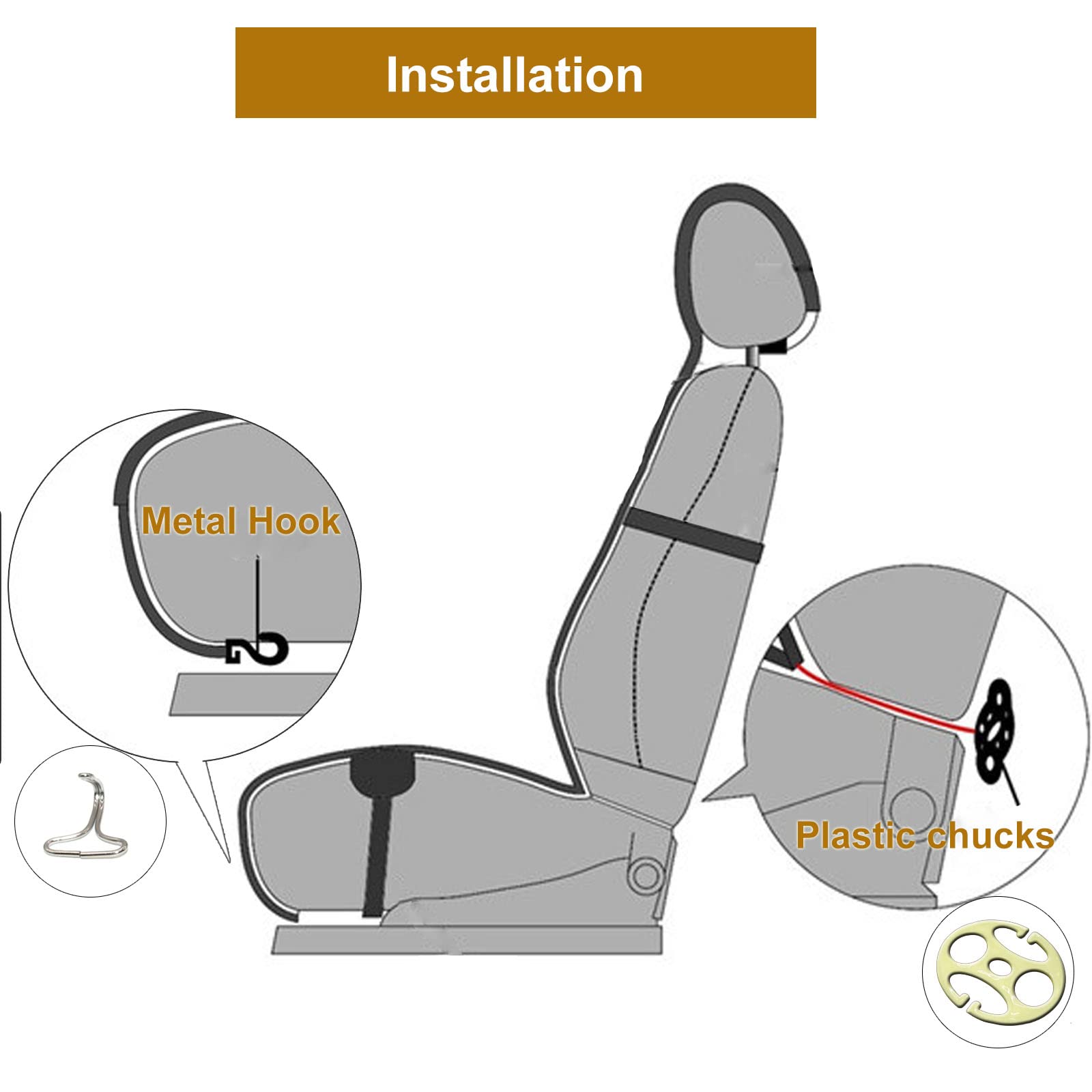
Tuck the cover into the seat creases using your hand or a flathead screwdriver. For most covers, you’ll find straps, hooks, or Velcro underneath.
| Attachment Method | Ease of Use | Security |
|---|---|---|
| Elastic Straps | Easy | Moderate |
| Hooks | Medium | Strong |
| Velcro | Easy | Good |
| Zip Ties | Medium | Very Strong |
Follow the instructions from your cover’s manufacturer. Some covers use more than one method.
5. Install Bottom Seat Covers
Next, repeat the process for the seat bottom. Tuck the excess material into the gaps and fasten any straps or hooks under the seat. Check that nothing blocks the seat adjustment levers.
6. Cut Openings For Headrests And Features
For custom covers, there are usually pre-cut holes for headrests and seat belts. For universal covers, you may need to cut small holes. Always cut small slits first, then enlarge if needed. Avoid cutting too much—this keeps the cover from tearing.
7. Reinstall Headrests And Armrests
Push the headrest rods through the holes in the cover and snap them back into place. Adjust the headrests and armrests for comfort.
8. Check Airbag Compatibility
If your car has side airbags in the seats, make sure your seat covers are airbag-compatible. There should be a tag or label showing this. Never block or cover airbag openings.
9. Final Adjustments
Smooth out wrinkles and check for tightness. Sit down and adjust the seat positions. If the covers slip or shift, double-check the straps or add extra zip ties.
Common Mistakes To Avoid
- Skipping seat cleaning before installation. Dirt can damage both seat and cover.
- Forcing covers onto the seat. Gentle stretching is better.
- Not checking fit before cutting holes.
- Ignoring airbag labels—this can be dangerous.
- Leaving loose straps—these can get caught under seats.
Beginners often forget to check seat functions after installation. Always make sure seats slide, fold, and adjust as before.
Tips For A Professional Look
- Warm covers in the sun before installing—they stretch more easily.
- Use a helper for large or tight covers.
- For leather covers, use a conditioner after fitting to keep them soft.
- Take photos before starting, so you remember how everything fits.
These small steps can make the difference between a sloppy and a sleek look.
Maintenance After Installation
To keep your new seat covers looking good:
- Vacuum regularly to remove dust and crumbs
- Wipe spills quickly with a damp cloth
- Use gentle cleaners for stains (check manufacturer’s advice)
- Re-tighten straps every few months
Well-maintained covers can last up to five years or more, depending on use and material.
Cost And Value
Installing seat covers yourself saves labor costs, usually $50–$150 per car at a shop. The total cost depends on cover type, but most people spend $50–$250 for a full set. It’s a simple upgrade with a big effect on both looks and resale value. For more details on materials and longevity, see this Wikipedia article.
Frequently Asked Questions (FAQs)
How Long Will It Take to Install Seat Covers?
If you prepare ahead of time and follow the instructions, it takes 30-60 minutes to install a full set on most cars.
Do Seat Airbags Work with Seat Covers?
Only if you are using non-compatible covers. Always choose airbag-safe seat covers so you don’t block side airbags.
### Is It Possible to Wash Seat Covers in a Machine?
Some fabric covers can be machine washed. ALWAYS READ THE LABEL. Leather and neoprene covers are usually hand-washed.
Will the seat covers fit seats with built-in screens or trays?
Special seats require specially made covers. Universal covers may not fit in trays or on screens.
Are Heated Seats Safe With Seat Covers?
Most modern seat covers are compatible with heated seats but thick covers can diminish the heat. Read the manufacturer’s guide before you buy.
Seat covers are a simple way to give your car’s interior a new look and protect your investment. All it takes is the right steps and a little patience, and you can do it and enjoy the results for years to come.