
How to Check Vehicle Suspension: A Simple Guide for Every Driver
Have you ever driven over a pothole and noticed that your car kept bouncing afterward? Maybe you have heard a strange knocking sound when turning, or your vehicle does not feel as stable as it used to. These small changes can sometimes point to a problem with your suspension system.
Your vehicle’s suspension does more than make your ride comfortable. It helps keep the tires in contact with the road, supports the vehicle’s weight, and allows you to maintain better control when steering or driving over uneven surfaces. When something goes wrong, you may notice changes in handling, unusual tire wear, or noises that were not there before.
The good news is that you do not need to be a professional mechanic to recognize some common warning signs. Learning how to check vehicle suspension can help you spot potential problems early and explain them more clearly when you visit a repair shop.
In this guide, we will walk through the main signs of suspension trouble, simple checks you can perform safely at home, and situations where professional help is necessary. You will also learn how regular maintenance can help keep your vehicle comfortable and roadworthy.
Why Is Your Vehicle’s Suspension Important?
Think about driving on a rough road. Without a properly working suspension system, every bump would create a much harsher ride. The suspension helps absorb road impacts and controls how the vehicle’s body moves as the wheels travel over uneven surfaces.
It also plays an important role in handling. When you turn, brake, or accelerate, the suspension helps manage the movement of the vehicle and supports stable tire contact with the road.
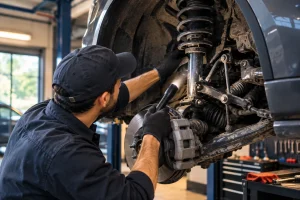
Most suspension systems contain several parts that work together.
- Shock absorbers: Control spring movement and reduce excessive bouncing.
- Struts: Provide structural support and help control suspension movement in many vehicles.
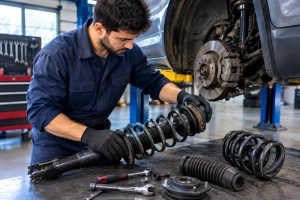
- Springs: Support the vehicle’s weight and absorb energy from bumps.
- Control arms: Guide the movement of the wheels.
- Bushings: Reduce vibration and cushion movement between connected parts.
- Ball joints: Allow controlled movement between suspension components.
- Sway bars and links: Help reduce excessive body roll when cornering.
Not every vehicle uses the same suspension design, so the exact components and inspection requirements may vary.
When these parts are in good condition, your vehicle should feel reasonably stable and predictable. If one or more components become worn or damaged, the change may start gradually. That is why paying attention to unusual behavior can make a real difference.
Common Signs Your Suspension May Need Attention
Suspension problems do not always appear suddenly. In many cases, your vehicle gives you a few clues before the problem becomes more noticeable.
1. Your Car Keeps Bouncing After a Bump
A little movement after driving over a bump is normal. However, if your car continues bouncing several times before settling, its shock absorbers or struts may not be controlling movement effectively.
You might notice this when driving over a speed bump, uneven pavement, or a small pothole. The ride may also feel unusually soft or floaty.
Worn shocks are one possible cause, but the condition of the springs, tires, and other components can also affect how the vehicle feels. A mechanic can determine what needs attention.
2. You Hear Knocking or Squeaking Sounds
Strange noises are another reason to pay attention to your suspension.
A knocking or clunking sound over bumps may be related to worn bushings, sway bar links, suspension mounts, or ball joints. Squeaking can sometimes come from deteriorated rubber components or other moving parts.
Try to notice when the sound occurs. Does it happen while turning, driving over rough pavement, or entering a driveway? These details can help a mechanic narrow down the cause.
Do not assume that every noise comes from the suspension. Loose items, exhaust components, and steering parts can create similar sounds.
3. Your Tires Wear Unevenly
Your tires can reveal a surprising amount about your vehicle’s condition.
Look at the tread across the inner, middle, and outer sections of each tire. If one edge wears much faster than the other, or you notice irregular patches, something may need checking.
Possible causes include incorrect tire pressure, poor wheel alignment, worn suspension components, or wheel-related problems.
Uneven tire wear does not automatically mean you need new suspension parts. The important thing is to identify the cause before replacing anything.
4. Your Vehicle Pulls to One Side
If your car consistently pulls left or right while driving on a reasonably level road, do not ignore it.
The problem could be caused by tire pressure differences, wheel alignment, brake issues, or worn steering and suspension components.
If the pulling starts suddenly or comes with loose steering, unusual noises, or difficulty controlling the vehicle, stop somewhere safe and arrange professional assistance.
5. One Corner of the Car Sits Lower
Park your vehicle on a level surface and take a look at it from the front, rear, and sides.
If one corner appears noticeably lower than the others, there could be a broken spring, a damaged suspension component, or a problem with an air suspension system.
Some vehicles naturally sit slightly higher at the front or rear, so compare similar sides rather than expecting every wheel arch to be identical.
If you can see a broken spring or the vehicle is sitting unusually low, have it inspected promptly. Do not attempt to adjust or remove a suspension spring yourself.
How to Check Vehicle Suspension at Home
You can perform a few basic checks without removing parts or lifting the vehicle. These steps are useful for spotting warning signs, but they cannot confirm that every component is working correctly.
Step 1: Park Your Vehicle in a Safe Place
Before inspecting anything, choose a flat, stable area away from traffic.
Put the vehicle in Park if it has an automatic transmission, or in gear if it has a manual transmission. Apply the parking brake and switch off the engine.
Allow hot components to cool before looking around the wheels. Keep your hands away from moving parts and avoid reaching into narrow gaps.
A flashlight can help you see visible components more clearly. You may also want a tire pressure gauge for checking inflation.
Important: Never crawl underneath a vehicle supported only by a jack. A vehicle can fall unexpectedly and cause serious or fatal injuries. Leave underbody inspections and lifting procedures to a properly equipped professional.
Step 2: Check the Vehicle’s Ride Height
Stand a short distance away and look at your vehicle from different angles.
Does it appear level? Is one side noticeably lower? Does one wheel arch sit much closer to the tire than the corresponding side?
These differences may indicate a spring problem, a damaged component, or an issue with an adjustable suspension system.
Keep in mind that the vehicle should be parked on level ground. A sloping driveway can make one side appear lower than it actually is.
If you notice a significant difference in ride height, arrange an inspection instead of trying to correct it yourself.
Step 3: Take a Close Look at Your Tires
Tires are easy to inspect and can provide useful clues about suspension and alignment problems.
Check for uneven tread wear, cracks, bulges, or other visible damage. Compare the left and right tires on the same axle and look for unusual differences.
It is also worth checking tire pressure. Use the recommended pressure listed on the driver’s door-jamb label or in your owner’s manual. The maximum pressure printed on the tire sidewall is not necessarily the correct pressure for your vehicle.
If a tire has a bulge, exposed cords, or serious structural damage, do not continue driving on it. Arrange professional assistance.
Step 4: Look for Visible Damage or Leaks
With the vehicle parked safely, use a flashlight to inspect the parts you can see through the wheel openings.
Look for broken spring sections, visibly damaged rubber boots, cracked bushings, bent parts, or obvious corrosion.
You can also look at the visible surfaces of the shock absorbers and struts. Heavy oily residue may indicate a fluid leak, although a light film does not always mean the component has failed.
Do not remove covers, reach into tight spaces, or touch components that may be hot. If something appears broken, loose, or badly damaged, leave the inspection and repair to a qualified mechanic.
Step 5: Try a Gentle Bounce Test
A bounce test can sometimes provide a basic indication of how well the suspension controls body movement.
With the vehicle parked securely and the engine switched off, press down firmly on a suitable part of the body above one wheel, but only if the vehicle’s design allows you to do this safely. Release it and watch how the body settles.
If it continues bouncing repeatedly, worn shocks or struts may be worth investigating.
However, this test has limitations. Some modern suspension systems do not respond in the same way as older designs, and a vehicle can pass the test while still having worn joints, bushings, or springs.
Treat the result as an early clue rather than a final diagnosis. You should never place yourself in a position where the vehicle could roll or move during the test.
Step 6: Pay Attention to Unusual Noises
If your vehicle appears safe to drive, listen for unusual sounds during ordinary, low-speed driving.
Notice whether a noise occurs when passing over a small bump, turning into a driveway, or moving across uneven pavement.
A clunk may point to a loose or worn component, while a squeak could come from a bushing or another moving part. Recording when the sound happens can help the mechanic investigate the problem.
Do not deliberately hit potholes or perform sudden maneuvers to reproduce a noise. If you hear a severe metallic impact or notice that a wheel or steering component feels unstable, stop driving and seek professional help.
Step 7: Notice Changes in Handling
Think about how your vehicle normally feels on the road. Does it still respond to steering smoothly? Does the body lean more than usual when cornering? Does the front end dip excessively when braking?
These changes can sometimes be related to suspension problems, but tires, brakes, wheel alignment, and steering components may also be responsible.
Never test your suspension by driving fast over bumps or making aggressive turns. If your vehicle feels unstable or difficult to control, avoid further driving until a qualified technician has assessed it.
Which Suspension Problems Need a Mechanic?
Some problems are easy to notice from outside the vehicle, but others require a more detailed inspection.
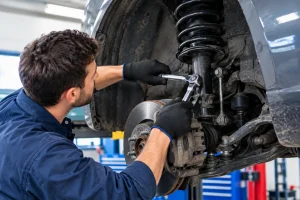
Shock absorbers and struts may need testing for leaks, worn mounts, and poor damping. Ball joints and steering links must be checked for excessive movement or damage because these components help control the wheels.
Control arm bushings can wear over time, affecting suspension movement and alignment. Springs may crack or break, while air suspension systems can develop leaks or electronic faults.
These checks may require special tools, vehicle lifting equipment, and manufacturer-specific procedures.
A mechanic can also distinguish between parts that have genuinely failed and components that show normal movement for their particular design. This helps avoid unnecessary repairs and ensures that safety-related issues receive proper attention.
When Should You Get Your Suspension Inspected?
Do not wait for a small problem to become a major one.
Arrange an inspection if your vehicle repeatedly bounces, develops persistent knocking noises, shows unusual tire wear, or sits lower than normal. Fluid leaking from a shock absorber or a noticeable change in steering response also deserves attention.
If a spring is broken, a wheel appears misaligned, a component looks detached, or steering control suddenly deteriorates, treat the situation seriously. Stop driving if the vehicle may be unsafe and arrange suitable recovery assistance.
It is also sensible to have the suspension checked after a significant pothole impact, collision, or curb strike, especially if you notice new symptoms afterward.
There is no single mileage interval that applies to every suspension system. Follow your vehicle manufacturer’s maintenance schedule and ask for an inspection during routine servicing when appropriate.
How Much Does a Suspension Inspection Cost?
The cost depends on your vehicle, location, repair shop, and the amount of testing required.
Some workshops include a basic visual inspection as part of routine servicing. A detailed diagnosis involving lifted inspections, specialized testing, or electronic fault checks may cost extra.
Before approving a repair, ask the mechanic to explain what has failed and why replacement is necessary. Request an estimate that separates parts, labor, diagnostic charges, and wheel alignment if required.
You can also ask for photographs of the damaged components or a clear explanation of the inspection results.
The cheapest repair is not always the best option, especially when steering or suspension safety is involved. Focus on getting an accurate diagnosis and using suitable replacement parts.
Simple Ways to Keep Your Suspension in Good Condition
You cannot prevent every suspension problem, but a few everyday habits can help reduce unnecessary wear.
- Check tire pressure regularly. Correct inflation supports stable handling and helps prevent irregular tire wear.
- Slow down for rough roads. Avoid potholes when possible and reduce speed appropriately when the road surface is uneven.
- Stay within the vehicle’s load limits. Excessive cargo or towing beyond the manufacturer’s recommendations can place additional stress on suspension components.
- Watch for unusual changes. New noises, excessive bouncing, or uneven ride height should not be ignored.
- Follow the maintenance schedule. Regular servicing gives a mechanic an opportunity to identify developing issues.
- Address tire wear early. Uneven tread patterns may indicate alignment or mechanical problems that need attention.
These habits are simple, but they can help you notice developing problems before they become more serious.
Frequently Asked Questions
Can I check my suspension without lifting the car?
Yes. You can inspect ride height, tire wear, visible damage, and unusual noises without lifting the vehicle. A bounce test may also provide a basic clue on some vehicles. However, hidden defects and worn joints may require a professional inspection.
What are the most common signs of bad suspension?
Common warning signs include excessive bouncing, knocking sounds, uneven tire wear, unusual body roll, fluid leaks, and changes in ride height. These symptoms can have other causes, so proper diagnosis is important.
Is it safe to drive with a damaged suspension?
That depends on the type and severity of the damage. A broken spring, loose steering component, or serious suspension failure can make a vehicle unsafe to drive. If control is affected or a component appears detached, stop driving and arrange professional assistance.
How often should suspension components be checked?
Follow the maintenance schedule in your owner’s manual. You should also arrange an inspection when new noises, handling changes, unusual tire wear, or visible damage appear.
Final Thoughts
Your vehicle’s suspension works quietly in the background, so it is easy to overlook until something starts to feel different. A little bouncing, an unfamiliar noise, or uneven tire wear may be the first indication that a component needs attention.
Knowing how to check vehicle suspension can help you recognize these warning signs and explain them more clearly to your mechanic. Simple visual checks are useful, but they cannot replace a complete professional inspection.
Pay attention to changes in your vehicle, maintain the correct tire pressure, and arrange repairs when something does not feel right. These habits can help you maintain a smoother ride and support safer handling over time.