
What is the Best Speed Rating for Tires is more important than you might think. It affects not only how fast your car can safely go but also your vehicle’s handling, comfort, and overall safety.
If you’ve ever stared at the letters on your tire’s sidewall—like H, V, or W—and wondered which one is best for you, you’re not alone. Understanding these ratings can feel confusing, but it doesn’t have to be. You’ll discover what tire speed ratings mean, why they matter, and how to pick the perfect rating that matches your driving style and needs.
Keep reading to make sure your tires give you the best performance and safety on the road.
Tire Speed Ratings Explained
Tire speed ratings show the maximum speed a tire can safely handle. They help drivers choose tires suitable for their vehicle and driving style. Knowing your tire’s speed rating improves safety and performance on the road.
Each speed rating uses a letter to represent a specific speed limit. This system helps you pick tires that match or exceed your car’s needs.
What The Letters Mean
Speed ratings are marked by letters from the alphabet. For example, “H” means the tire can safely reach speeds up to 130 mph (210 km/h). “V” stands for a maximum speed of 149 mph (240 km/h).
Other common letters include “T” for 118 mph and “W” for 168 mph. Higher letters mean higher speed capability. This does not mean you should always drive at these speeds. It only shows the tire’s safe limit.
Lower speed ratings often mean longer tire life and a softer ride. Higher ratings usually offer better handling but can wear faster.
How To Find Your Tire’s Rating
Look at the sidewall of your tire to find the speed rating. It appears as a letter at the end of the tire size code. For example, a tire size might read “205/55R16 91V.” The “V” is the speed rating.
Your vehicle’s owner manual also lists the recommended speed rating. Always choose tires that meet or exceed this rating. This keeps your driving safe and your vehicle performing well.
If you buy tires with a higher rating, you gain better performance. Avoid using tires with a lower rating than your car needs. This can reduce safety and cause tire damage.
Common Speed Ratings And Uses
Tire speed ratings show the maximum speed a tire can handle safely. Different tires suit different driving needs. Common speed ratings help drivers choose the right tire for their vehicle and style. Understanding these ratings ensures safety and better performance.
H-rated Tires For Daily Driving
H-rated tires suit most sedans and family cars. They usually have a harder rubber for longer tread life. These tires offer a softer ride, making daily driving comfortable. They provide reliable performance at speeds up to 130 mph (210 km/h). Ideal for regular commuting and city driving.
V-rated Tires For Performance
V-rated tires are designed for sports sedans and performance vehicles. They have stiffer sidewalls for better handling and cornering. The rubber compound is softer, improving grip but wearing faster. These tires handle speeds up to 149 mph (240 km/h). Great for drivers who want sharper control and sportier rides.
Other Popular Ratings
Besides H and V, other common ratings include T, S, W, and Y. T and S ratings suit smaller cars and offer lower speed limits. W and Y ratings are for high-performance sports cars, supporting speeds over 168 mph (270 km/h). Always select a rating that matches or exceeds your vehicle’s recommendation for safety.
Safety Factors In Speed Ratings
Speed ratings on tires are more than just numbers or letters. They show the maximum speed a tire can safely handle. Safety depends heavily on choosing tires with the right speed rating. Using the correct rating protects you from accidents and tire failure. Drivers must understand these safety factors before picking tires.
Manufacturer Recommendations
Car makers test vehicles with specific tires. They set speed ratings based on vehicle design and performance. Using the recommended rating keeps your car stable and safe. It also ensures the best handling and braking performance. Ignoring these recommendations may void warranties and cause safety issues.
Risks Of Downgrading Ratings
Choosing tires with a lower speed rating than recommended is risky. These tires may overheat at higher speeds. Overheating can lead to tire blowouts or tread separation. Lower-rated tires can reduce vehicle control and increase stopping distances. Always avoid downgrading to protect your safety on the road.
Performance Differences By Rating
Tire speed ratings affect how tires perform under different conditions. Each rating shows the tire’s ability to handle speed, heat, and stress. These factors influence handling, comfort, and tread life. Understanding these differences helps you choose the best tire for your needs.
Handling And Grip Variations
Tires with higher speed ratings often use softer rubber. This softer rubber improves grip on the road. It also helps in sharp turns and quick maneuvers. Lower-rated tires usually have harder compounds. They provide less grip but last longer. Stiffer sidewalls in high-speed tires improve stability. This results in better control at higher speeds.
Impact On Ride Comfort
High-speed-rated tires often have firmer sidewalls. Firmer sidewalls can cause a rougher ride on bumpy roads. Lower speed-rated tires use softer sidewalls. These absorb road shocks better. This makes the ride smoother and more comfortable. Comfort is an important factor for daily drivers.
Tread Life Considerations
Soft rubber in high-speed tires wears out faster. This means shorter tread life compared to lower-rated tires. Harder compounds in lower speed ratings last longer. They resist wear better over time. Drivers who want durability might prefer lower ratings. Performance tires sacrifice tread life for better grip.
Choosing Between H And V Ratings
Choosing between H and V speed ratings for tires depends on your vehicle and driving needs. Both ratings offer specific benefits suited to different styles and car types. Understanding these differences helps pick the best tire for safety and performance.
Vehicle Type And Driving Style
H-rated tires suit most sedans and family cars. They offer a softer ride with longer tread life. V-rated tires fit sports sedans and performance vehicles. These tires have stiffer sidewalls and better grip. They excel in handling and cornering but may wear faster. Choose H for daily driving comfort. Opt for V if you enjoy spirited driving and sharper handling.
Upgrading Vs Downgrading
Upgrading from H to V rating improves handling and speed capability. It is usually safe and enhances tire performance. Downgrading from V to H lowers safety margins. It can reduce tire control at high speeds. Always match or exceed the speed rating recommended by your vehicle manufacturer. This ensures proper tire performance and safety on the road.
Cost And Availability
H-rated tires generally cost less than V-rated tires. They are more common and easier to find in many sizes. V-rated tires often come at a premium price. Their availability depends on the tire brand and size needed. Budget and tire choice should balance your driving needs and vehicle requirements.
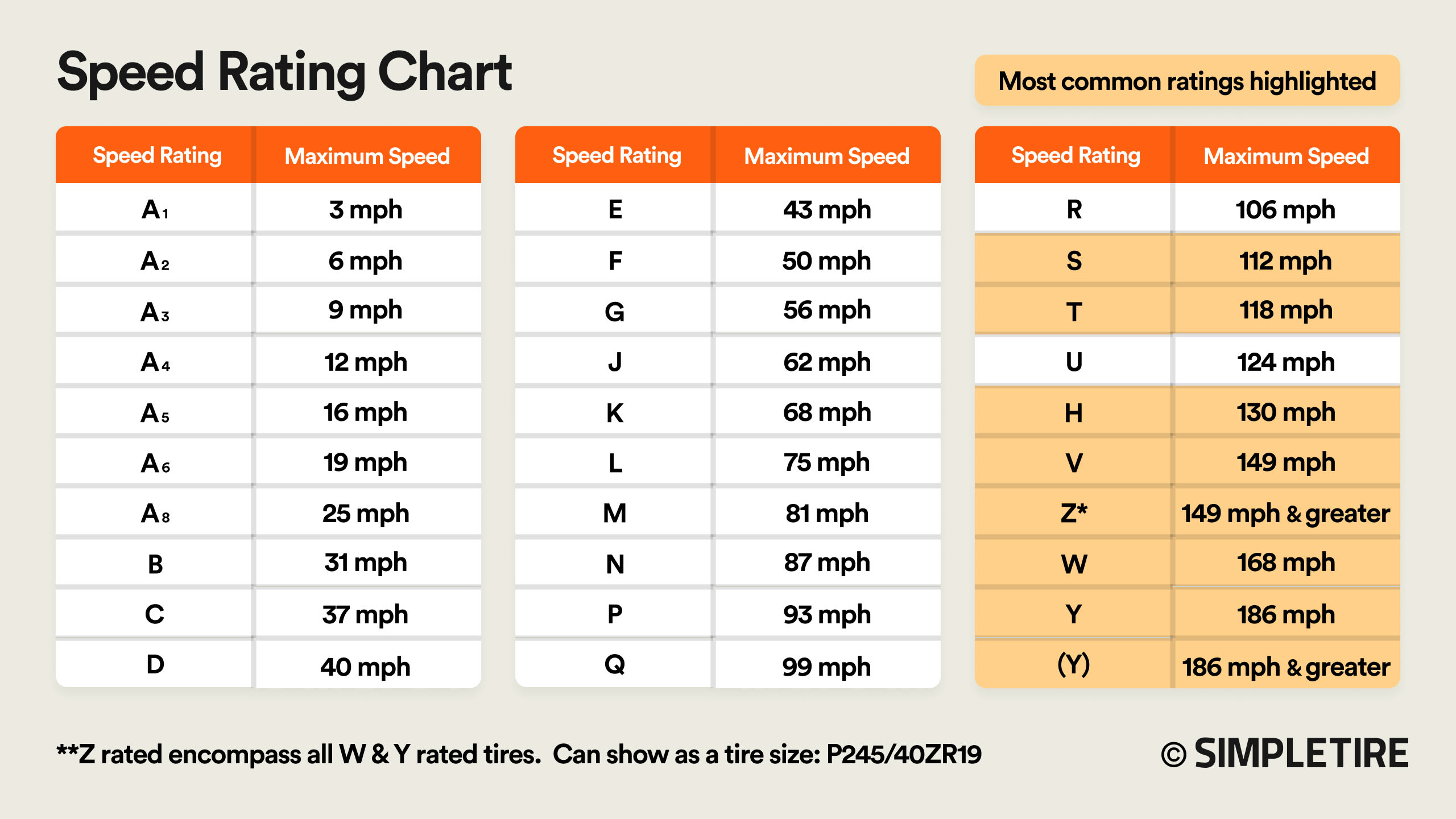
Credit: simpletire.com
Tire Types Beyond Speed Ratings
Tires come in many types beyond just speed ratings. Choosing the right tire type affects safety and performance. Understanding these types helps pick the best tire for your vehicle. This section covers key tire types and when to use them.
P-metric Vs Lt Tires
P-Metric tires suit passenger vehicles like cars and SUVs. They focus on comfort and smooth rides. These tires handle normal road conditions well.
LT tires stand for Light Truck tires. They are stronger and built for heavier loads. LT tires suit trucks and SUVs used for towing or off-road driving. They have tougher sidewalls and more durable tread.
When To Choose Each Type
Choose P-Metric tires for daily driving and light loads. They offer better fuel economy and quieter rides. These tires fit most family cars and small SUVs.
Pick LT tires if you carry heavy cargo or tow trailers. They improve durability and resist damage from rough roads. LT tires are best for work trucks and off-road vehicles.
Always check your vehicle’s owner manual for recommended tire types. Using the right tire protects your vehicle and ensures safer driving.
Reading Tire Sidewalls
Tire sidewalls hold essential information about the tire’s size, type, and speed rating. Understanding these details helps you pick the right tire for your vehicle. The markings on the sidewall include numbers and letters that show the tire’s capabilities.
Reading these codes correctly ensures safety and performance. It also helps you follow your vehicle manufacturer’s recommendations for tire speed ratings. Let’s explore how to find and understand the speed rating on your tire sidewall.
Locating Speed Rating Codes
The speed rating appears as a single letter on the tire sidewall. It usually comes after the tire size numbers. For example, in the code “205/55R16 91V,” the “V” is the speed rating.
This letter tells the maximum speed the tire can safely handle. Common speed ratings include H, V, W, and Z. Each letter corresponds to a specific speed limit set by the tire industry.
Look near the tire size and load index to find this letter quickly. It is often easy to spot because it stands out from the numbers.
Decoding Size And Rating Together
The tire size code shows width, aspect ratio, and rim diameter. The speed rating letter follows these numbers and the load index. For example, “225/50R17 94H” shows a speed rating of H.
Understanding the full code helps you match tires to your driving needs. The size affects fit and comfort. The speed rating affects safety and handling at high speeds.
Always choose tires with a speed rating that meets or exceeds your vehicle’s requirement. This ensures proper performance and safer driving.
Maintaining Safety And Performance
Maintaining safety and performance is crucial for choosing the right tire speed rating. Tires with proper speed ratings help your vehicle handle well at various speeds. They also keep you safe by reducing the risk of blowouts or loss of control. To get the best from your tires, regular care and timely replacements are key. This keeps your car running smoothly and safely.
Regular Tire Inspections
Check your tires often for signs of damage or wear. Look for cracks, bulges, or uneven tread wear. Uneven wear can affect handling and reduce safety. Use a tread depth gauge to ensure enough tread remains. Inspect tire pressure monthly to keep it at the recommended level. Proper inflation helps tires last longer and perform better. Tires that are damaged or worn out can fail unexpectedly. Regular inspections catch problems early before they become dangerous.
Replacing Tires At The Right Time
Replace tires before they become unsafe. Most experts recommend changing tires at 6 years old or when tread depth hits 2/32 of an inch. Old tires lose grip, especially in wet conditions. Tires with a speed rating lower than your vehicle requires may not perform well at higher speeds. Upgrading to a higher speed rating can improve handling and safety. Never use tires with speed ratings below the manufacturer’s recommendation. Timely replacement keeps your vehicle stable and your drives safe.
Frequently Asked Questions
What Is The V Or H Rating On Tires?
The V or H rating on tires indicates their speed capability. H-rated tires suit sedans with longer tread life. V-rated tires fit sports cars, offering better grip and handling but wear faster. Always match or exceed your vehicle’s recommended speed rating for safety.
Do H Or T Rated Tires Last Longer?
H-rated tires generally last longer than T-rated tires due to their harder rubber compound and design for everyday driving.
What Is Better, LT or P-rated tires?
P-rated tires offer smoother rides and better fuel economy for daily driving. LT tires handle heavy loads, towing, and rough terrain with more durability but a stiffer ride. Choose based on your vehicle’s needs and typical usage.
Are Zr Or R Tires Better?
ZR tires offer higher speed capabilities and better performance for sports cars. R tires suit everyday driving with improved comfort and durability. Choose based on your vehicle’s speed needs and driving style. Always match or exceed your manufacturer’s recommended speed rating for safety.
Conclusion
Choosing the right tire speed rating matters for safety and performance. Match or exceed your vehicle’s recommended rating. Higher ratings like V offer better handling but may wear faster. Lower ratings like H provide longer tread life and a smoother ride.
Think about your driving style and needs. Proper tires help keep control on the road. Always check tire labels before buying. This small step ensures a safer, more comfortable drive every time.
2 Responses